We’re always looking for new-to-us materials to incorporate into our projects – that something unexpected that transforms a room from simply beautiful to “I feel seen.”
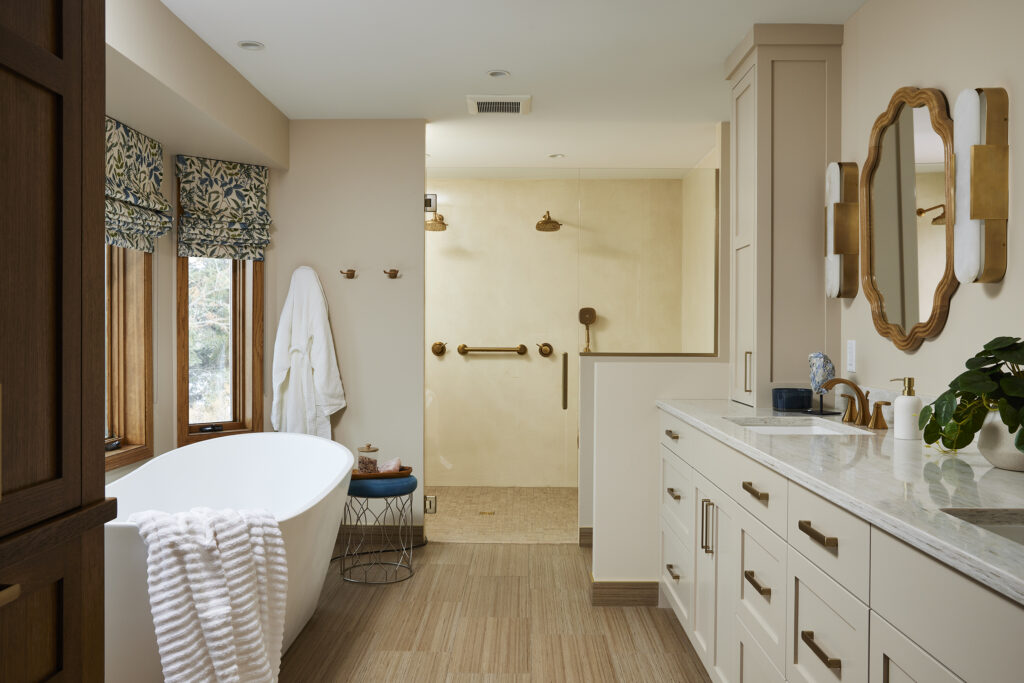
In last month’s Project Profile, we briefly touched on just such a material, tadelakt, in the Serene Ensuite project. It was our first foray into using this centuries-old technique, and we’re still buzzing from the finished result: luminous, layered and full of depth.
Maybe tadelakt is new to you too? If so, join us on our deep-dive into this ancient technique!
A Brief History
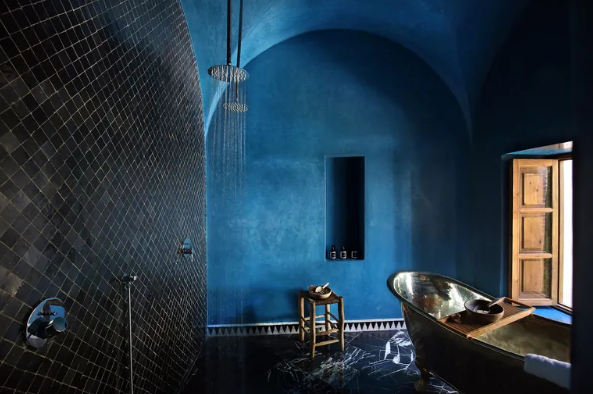
Tadelakt is a traditional Moroccan lime plaster waterproofing technique that’s been used in hammams and fountains for centuries.
Developed in Morocco’s Marrakesh region, tadelakt uses lime and black olive soap to create luminous, stone-like, waterproof surfaces.
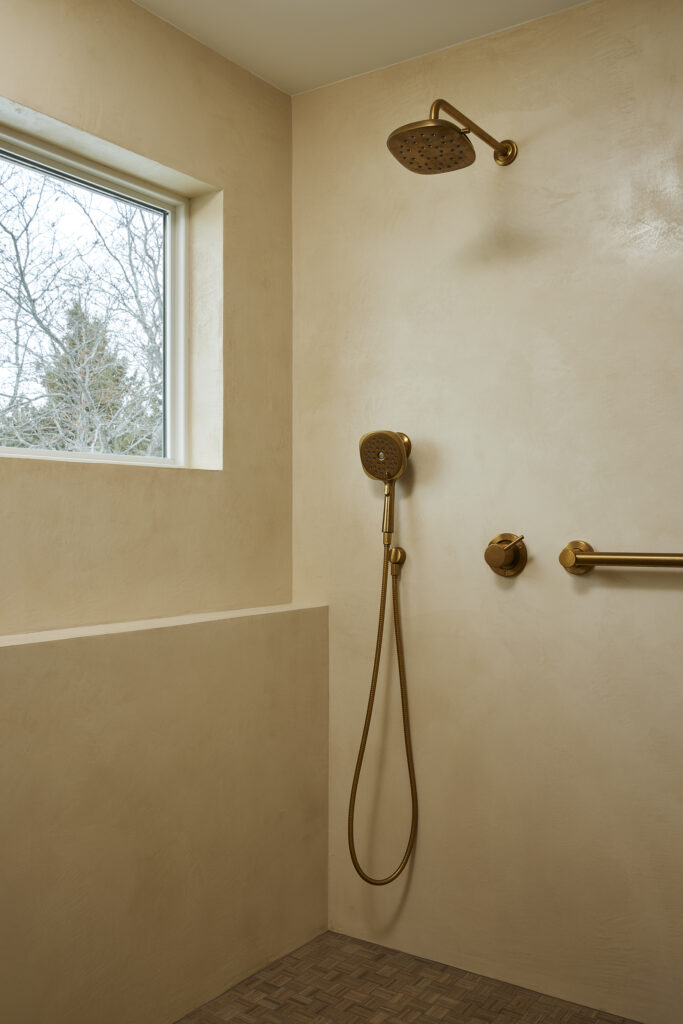
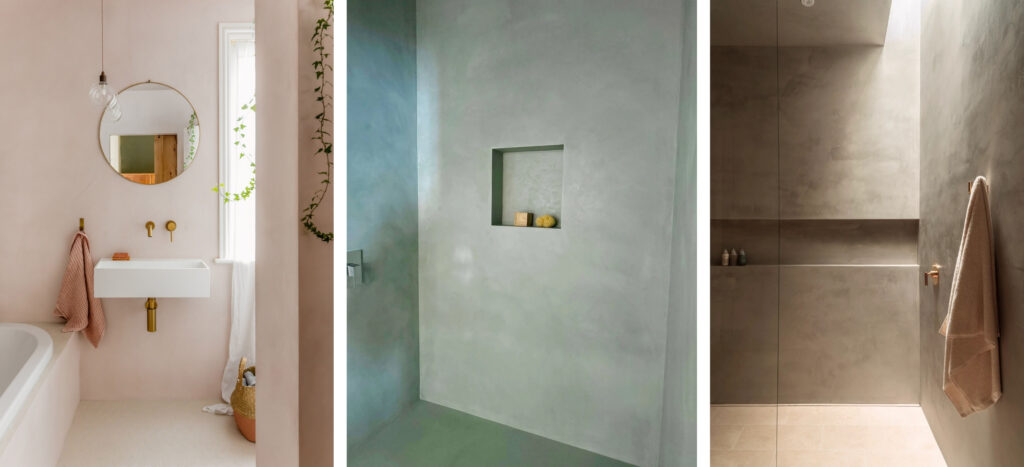
The process enables the creation of large, continuous surfaces, unlike tiling which requires the use of grout. This presents a great advantage in contemporary design, as tadelakt allows for multiple planes to be covered in the same seamless application (think walls, ledges, benches in a spa or your home shower), creating one continuous architectural surface.
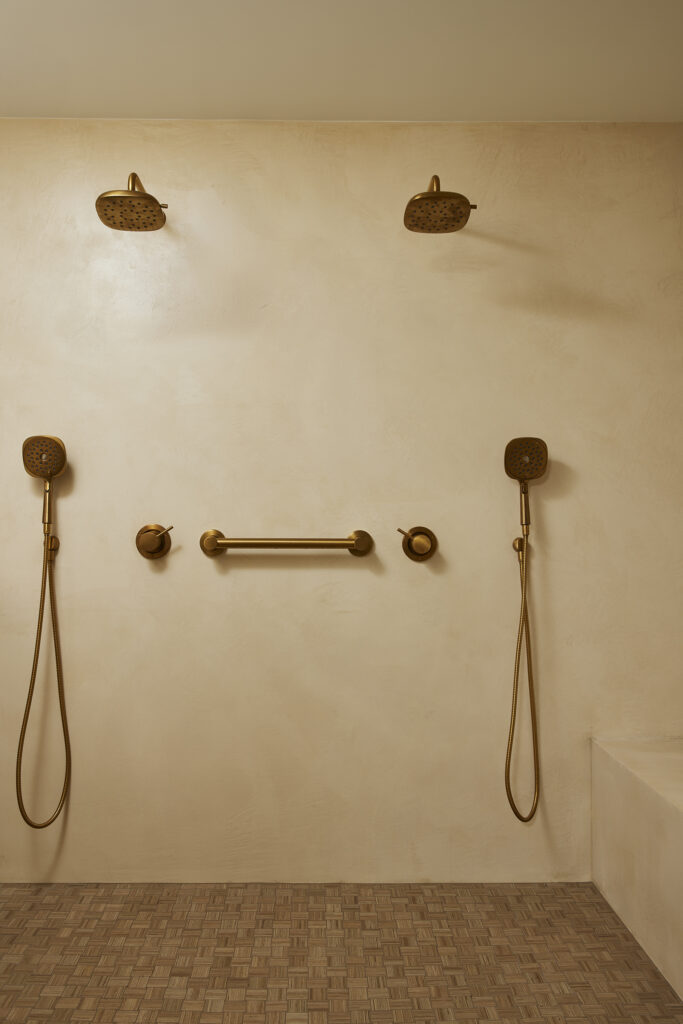
In our Serene Ensuite project, tadelakt application made for one lustrous surface across shower walls, ledges, the window framing, and in-shower bench.
Good Chemistry
And now for the science!
True Moroccan tadelakt combines lime plaster and black olive soap through a stone burnishing technique. When the calcium hydroxide of lime combines with the stearic acid in black olive soap, it creates calcium stearate, a waterproof compound. This process is called saponification.
As Muhamed Benznana explains, the new calcium stearate compound “forms in situ—meaning it’s created in place, penetrating the pores of the plaster rather than sitting on top as a coating,” making the surface waterproof, breathable, durable, and self-renewing through periodic soap applications over time. (www.Marrakeche.com)
In addition to being waterproof, the lime’s high pH level means the tadelakt is naturally mold-, mildew-, and fungus-resistant, making it an ideal finish for wet spaces.
But be warned! Most of the pre-mixed “tadelakt” products readily available online and in stores do not follow this process, and instead combine additives with wax sealers. While this makes application easier and the product shelf-stable, it results in a topical, rather than integrated waterproofing process.
For true Moroccan tadelakt, you must turn to an expert.
Only Skilled Artisans Need Apply
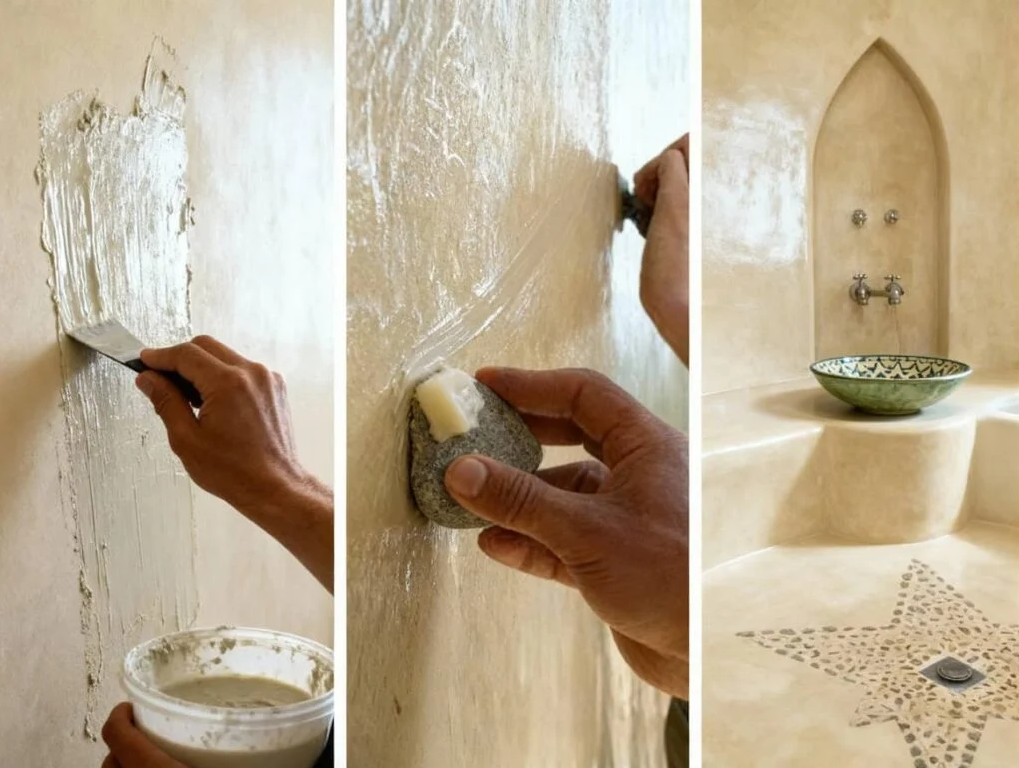
Unless you take a deep interest in the tadelakt process and devote considerable time to study and practice, we only recommend relying on a skilled tadelakt artisan for application.
Whoever you employ should have knowledge of the tadelakt chemical process, appropriate ingredients and recipes, proper substrate preparation, plaster application, stone compression, saponification, curing and maintenance. This is not a beginner-friendly application: only trust someone dedicated to the craft.
When you do, lustrous, gleaming waterproof surfaces await.
It’s unexpected.
It’s transformative.
It’s so worth it.